
Retaining Wall Cost in Connecticut: Block vs. Natural Stone + Engineering Factors
Straight answers on cost, scope, and what changes the number. If you want a project-specific range, call or text with rough dimensions and a couple photos.
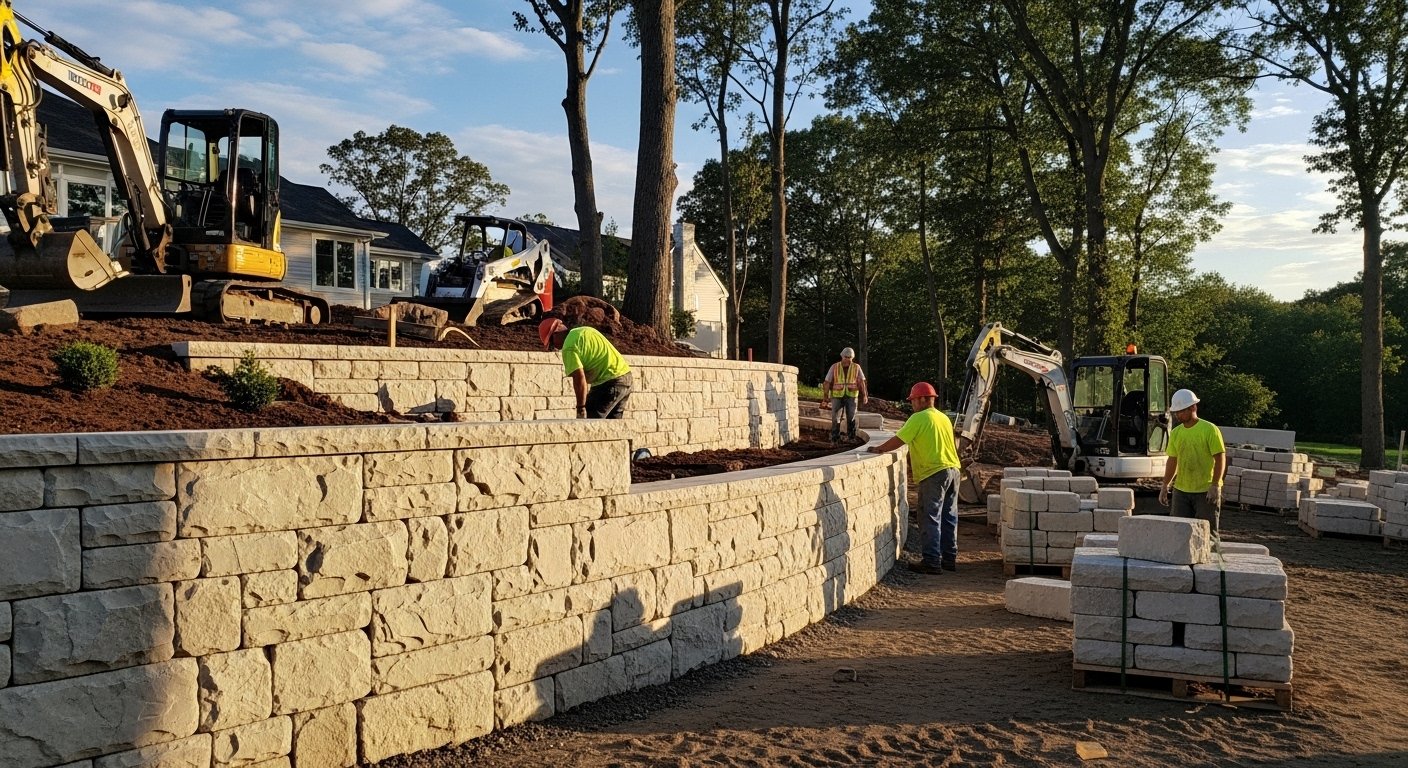
Why retaining wall pricing is spread out
Retaining walls are structural builds. Height, soil conditions, and drainage requirements matter as much as length.
In Connecticut, freeze/thaw cycles and wet seasons mean drainage and base prep are non-negotiable if you want the wall to stay straight over time.
Block vs. natural stone
Segmental block systems are engineered and consistent, with predictable installation methods and reinforcement options.
Natural stone walls look premium and timeless, but labor and material variability can increase cost—especially when matching stone sizes and maintaining alignment.
Engineering and reinforcement factors
Taller walls and walls supporting critical areas often require engineering details. That can include reinforcement, geogrid, and specific backfill/drain specs.
Even smaller walls can fail if water pressure isn’t relieved. Drainage is not an upgrade—it’s part of the wall.
How to get a realistic range
Measure approximate length and height, note if it’s a tiered wall, and share a few photos. That’s usually enough to give a useful ballpark before a site check.
Related services
If you’re planning one of these builds, the service pages include process, pricing factors, and FAQs.
Get a range for your yard
Text is perfect for photos. Call is best for fast scope planning. Either way, we’ll guide the right next move.
FAQ
Short answers to the most common follow-up questions.
When does a wall require engineering?
Taller walls, walls supporting driveways/structures, or specific soil conditions often trigger engineering requirements.
What’s cheaper: block or natural stone?
Segmental block walls are typically more predictable in cost. Natural stone varies by material and labor intensity.
Do walls need drainage?
Yes. Drainage is essential to reduce pressure behind the wall and extend lifespan.
How long do retaining walls last?
A properly built wall with drainage and correct base prep can last decades.