
Paver Patio Installation in Shelton, CT
Get a hardscape build that feels permanent, drains correctly, and looks right with the home. We’ll walk you through layout, materials, and real pricing factors—then build it clean and tight.
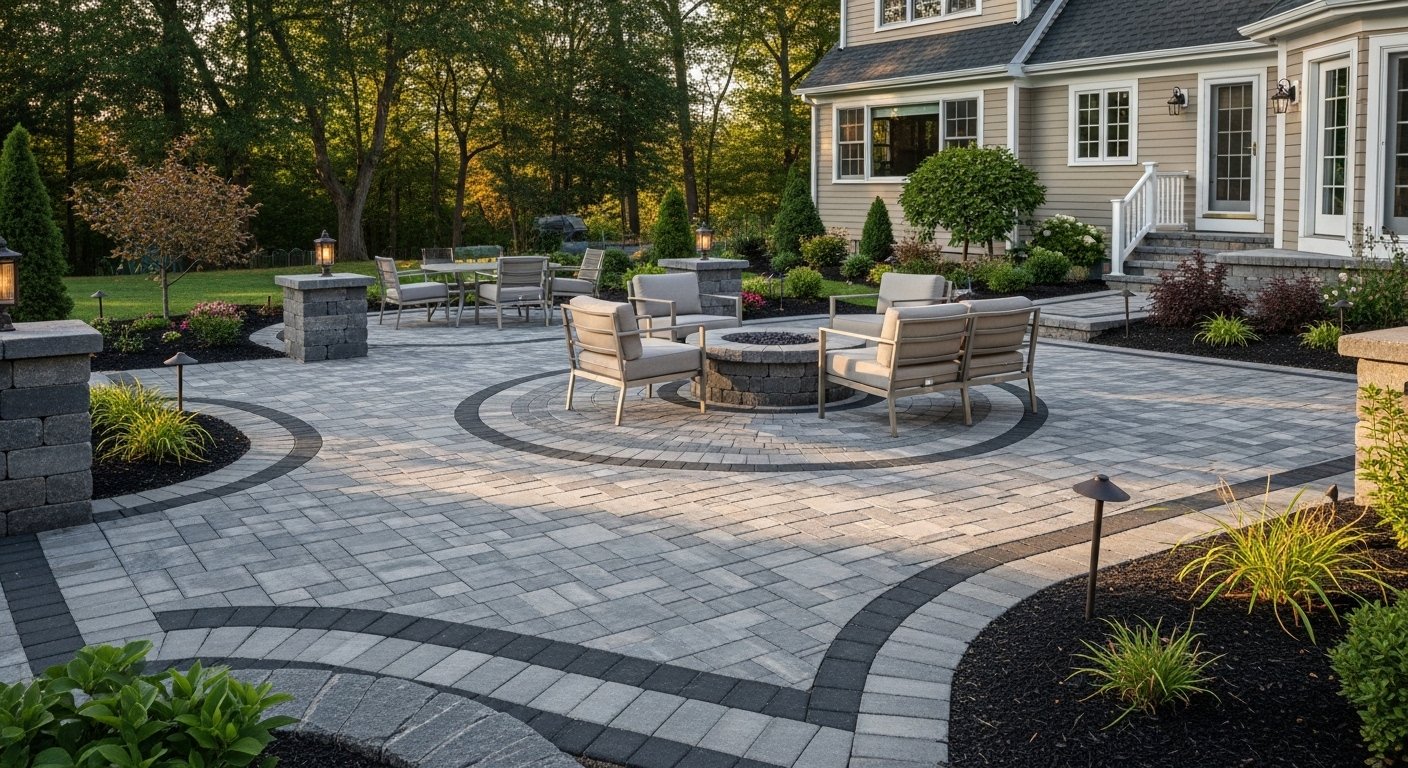
Signs this project is on your radar
If a few of these sound familiar, you’re in the right place. We’ll confirm the cause and recommend the cleanest fix—without guessing.
- Your current patio is cracked, heaving, or settling unevenly
- Water pools where you want seating or a grill
- The backyard feels unusable after rain or in spring thaw
- You want a larger entertaining space without a full deck rebuild
- You’re tired of mud tracking into the house from a bare yard
- Existing concrete looks dated and stains won’t come out
- Your slope makes a flat patio feel “impossible”
What to expect from a paver patio installation project
A paver patio is one of the few upgrades that changes how you use the entire backyard. The key is the base and the pitch—those decide whether it looks good for years or slowly becomes a maintenance headache. In Shelton, we plan patios with freeze/thaw and heavy rain in mind. That means proper excavation, compaction, edge restraint, and a drainage plan that doesn’t dump water toward the home or into a low spot.
Design + build with the site in mind
We plan around grade, runoff, access, and how you want to use the space. Then we build with tight base work, clean edges, and durable materials.
- On-site evaluation and layout guidance
- Material selection support (color, format, finish)
- Drainage and pitch planning
- Clean excavation, compaction, and finish work
A straightforward sequence
- Scope call/text: We confirm goals, size, and must-haves.
- Site check: Grades, soil, drainage paths, access, and utilities.
- Plan + quote: Clear assumptions, options, and next steps.
- Build: Excavation → base → install → finish details.
- Walkthrough: Final review and care guidance.
Pricing factors that move your budget
Hardscape pricing isn’t just square footage. These are the items that typically change the number.
- Excavation depth + base work: Poor soil, old concrete removal, or deeper builds add labor.
- Access: Tight gates, long carry distances, and protected landscaping affect production.
- Drainage: Added drains, tie-ins, or regrading can be essential (and worth it).
- Material selection: Premium stone, caps, and large-format units change installed cost.
- Grade changes: Steps, landings, and terracing add complexity.
- Edges + borders: Soldier courses, contrasting borders, and curves take more time.
- Integrations: Lighting, gas sleeves, or future kitchen planning saves headaches later.
- Finish level: Clean transitions, detail cuts, and alignment take craftsmanship.
Want a fast ballpark range?
Call or text with rough dimensions (or a photo), and we’ll tell you what typically drives cost on homes like yours in the Shelton area.
Service area coverage
Built in Shelton, and regularly working in nearby towns for high-ticket outdoor living projects.
Bundle work for a cleaner result
Many projects are most efficient when planned together—especially when drainage or grading is involved.
Decision support
Common questions
Clear answers—no runaround.
How long does a paver patio install take?
Most patios take 2–5 working days once materials are on site. Larger layouts, walls, steps, or drainage add time.
What’s the typical price range for a paver patio in Shelton?
Most projects land between about $8,000 and $35,000 depending on size, base work, access, and stone selection.
Do pavers shift in winter?
They can if the base isn’t built correctly. A properly excavated, compacted base with edge restraint holds up far better through freeze/thaw.
Can you build on a sloped yard?
Yes. We often terrace the area using grade changes, steps, and retaining where needed so the patio feels flat and intentional.
Is a permit required?
Sometimes, depending on scope and proximity to utilities or drainage. We’ll flag what typically triggers permits during planning.
What paver styles work best for a modern look?
Large-format pavers, clean borders, and restrained color blends tend to look the most architectural and timeless.
Will water run toward my foundation?
It shouldn’t. We set pitch intentionally and can add drains where needed so water exits the patio zone safely.
Can you add a fire pit or kitchen later?
Usually, but it’s more cost-effective to plan conduits, sleeves, and layout upfront so you’re not cutting pavers later.
How do I maintain the patio?
Seasonal rinse, occasional joint sand touch-ups, and optional sealing depending on the paver type and exposure.