
Repair vs. Replace a Retaining Wall: How to Decide Before You Spend Twice
Straight answers on cost, scope, and what changes the number. If you want a project-specific range, call or text with rough dimensions and a couple photos.
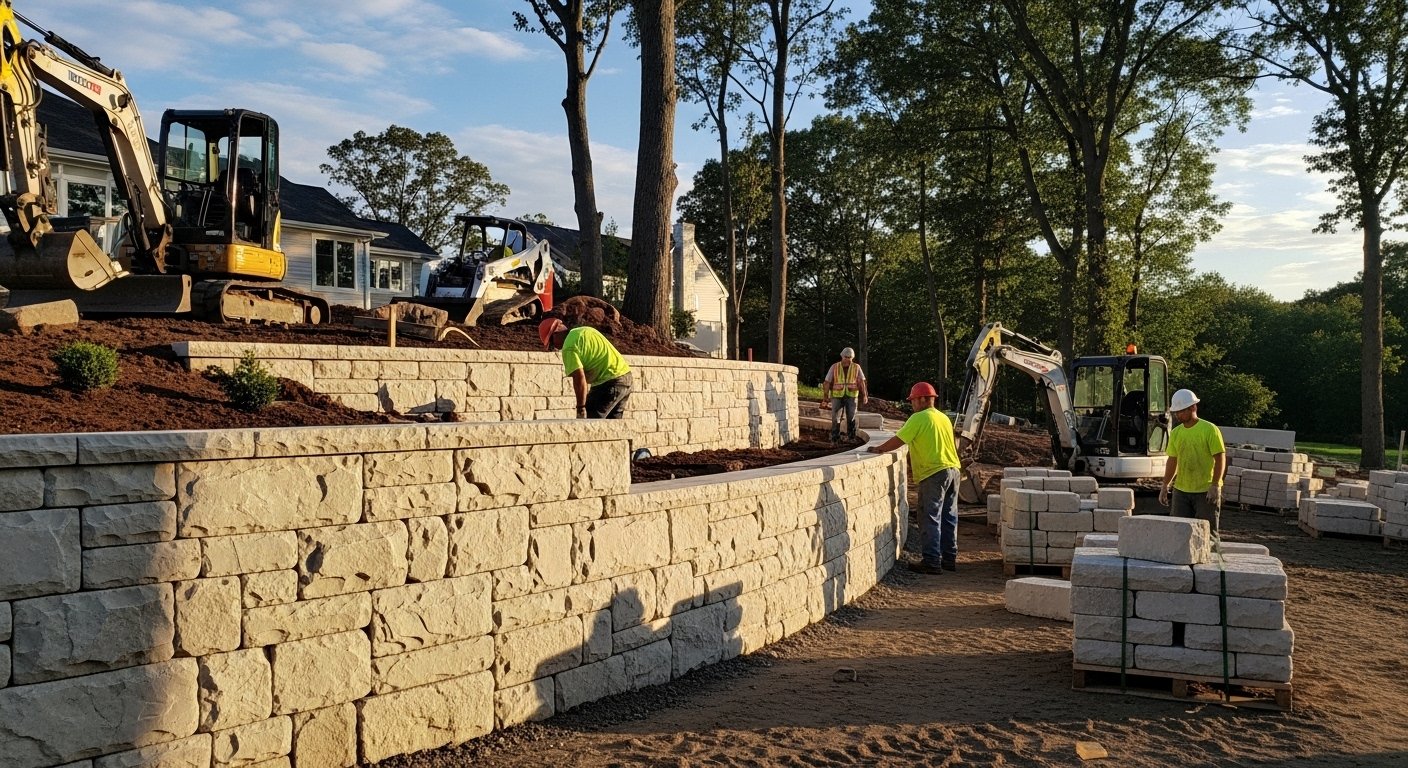
Start with the failure pattern
A single cracked block or a loose cap can be a repair. A wall that’s leaning, bulging, or showing widespread separation is often telling you the base and drainage are failing.
The fastest way to waste money is paying for cosmetic fixes when the structural problem remains.
What repairs can reasonably solve
Resetting caps, addressing minor settlement, regrading surface water away from the wall, and improving downspout discharge are common repair wins.
If pressure is building behind the wall, drainage improvements can sometimes extend life—but it depends on the wall’s structure.
When replacement is the smarter spend
If the wall is out of plumb, has significant cracking, or continues to move season to season, rebuild often provides the best long-term value.
Replacement is also an opportunity to improve layout—terracing, adding steps, or creating usable flat space.
How to decide quickly
Send photos showing the full wall length, the leaning area, and the top/bottom transitions. We can often tell you whether it’s in the repair zone or rebuild zone.
Related services
If you’re planning one of these builds, the service pages include process, pricing factors, and FAQs.
Get a range for your yard
Text is perfect for photos. Call is best for fast scope planning. Either way, we’ll guide the right next move.
FAQ
Short answers to the most common follow-up questions.
Can a leaning wall be repaired?
Sometimes, but if the base and drainage are wrong, repairs can be temporary. Rebuild may be the safer long-term spend.
What are signs of structural failure?
Bulging, significant leaning, cracking, and water pressure behind the wall are common indicators.
Is drainage the main issue?
Often yes. Without drainage relief, pressure builds and walls fail.
Should I replace in sections?
Sometimes. It depends on failure pattern and how connected the wall structure is.